
Rate-Hike Bets Boost Dollar, Pressure Gold as Bank Earnings Risk Emerges After AI Selloff
Two hot fronts are currently developing across financial markets, while a third one may be emerging. Expectations of higher interest rates (with the Fed tomorrow, followed by the BoE and BoJ in the days ahead) are giving the US dollar a boost but, above all, are weighing on gold, which has fallen decisively below the 40-point score threshold, also pressured by sharply rising bond yields (the 10-year Treasury has reached the psychologically — and technically — significant 5% yield level).
On the equity side, the sell-off in technology stocks, and particularly in AI-related names, appears to be losing momentum. However, a potential third front is emerging: weakening bank-sector earnings. Yesterday, Bank of America fell more than 5% after CEO Brian Moynihan provided a disappointing outlook for dealmaking fees, dragging other major banks lower as well.
Overall, sentiment remains between neutral and risk-off, while volatility continues to stay low. Futures point to a negative open for both European and US markets.
Market Weather Map
September 15, 2026
US Equities
Eu Equities
Asia Equities
Commodities
Bonds
Dollar Index
Technology
Gold
Oil
Crypto
Market Summary
Do you want to see the score details for all assets monitored by KBMeter?
Try free for 14 days →Financial markets sentiment
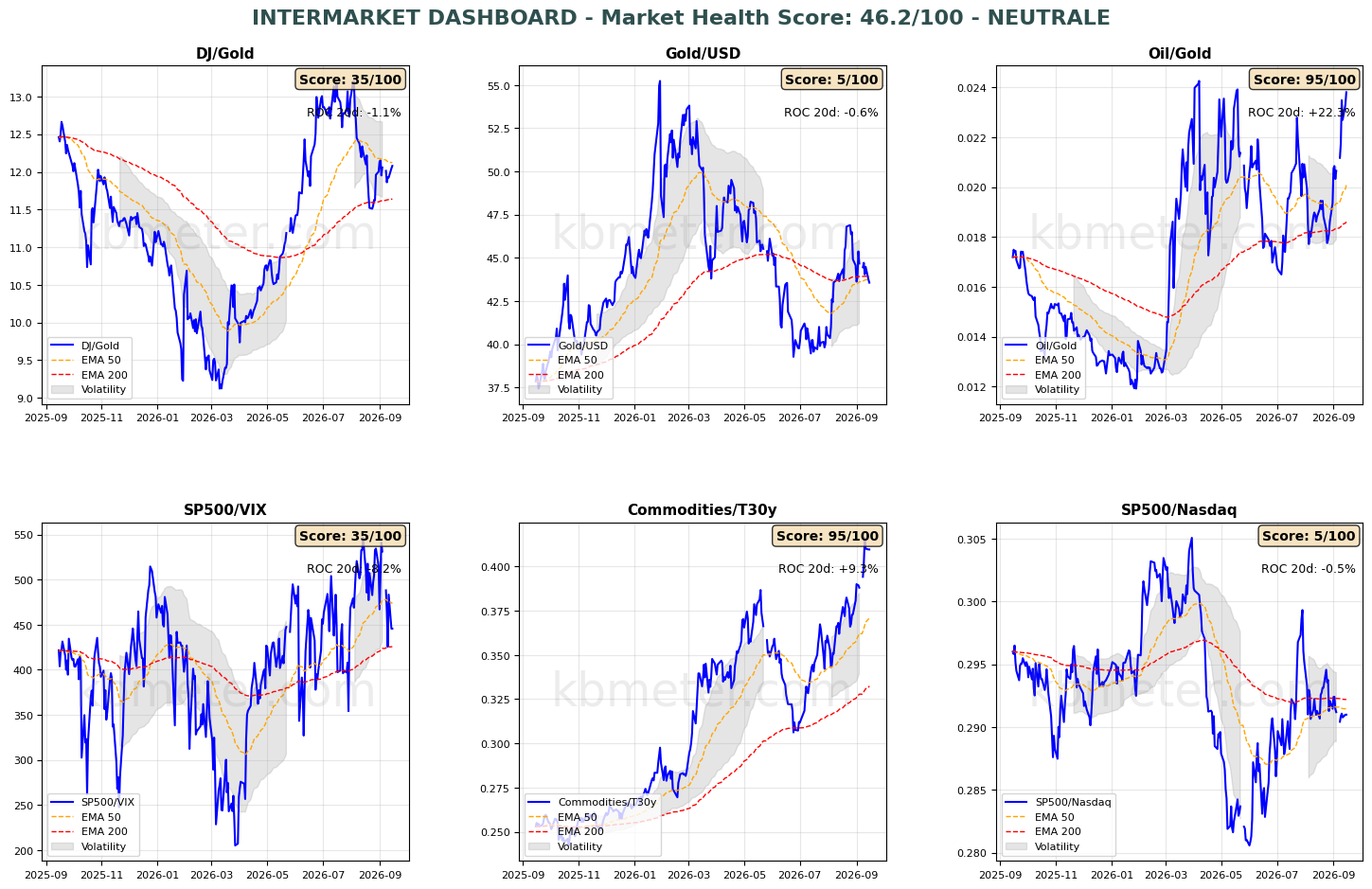
Financial markets are showing neutral/slightly negative sentiment today. Intermarket analysis points to a Market Health Score of 46/100. Looking at our intermarket dashboards, the most interesting development is the loss of strength in gold. Despite weakening equity sentiment, the Dow/Gold ratio is moving higher, while the Gold/Dollar ratio has broken below its long-term moving average — a bearish signal that will, of course, need further confirmation. The Oil/Gold ratio continues to rise and is back at its early-spring highs.
What is happening? The key driver at the moment appears to be increasingly strong expectations of a Federal Reserve rate hike, combined with a broad rise in real yields. Both factors are weighing on gold, which pays no coupon and therefore tends to suffer when yields rise. Ultimately, among the many underlying drivers, strong inflationary pressure remains a key factor, with the Commodities/Bonds ratio continuing to hover around its period highs.
The technology sector is also absorbing the AI-driven sell-off, although the S&P 500/Nasdaq ratio remains broadly stable.
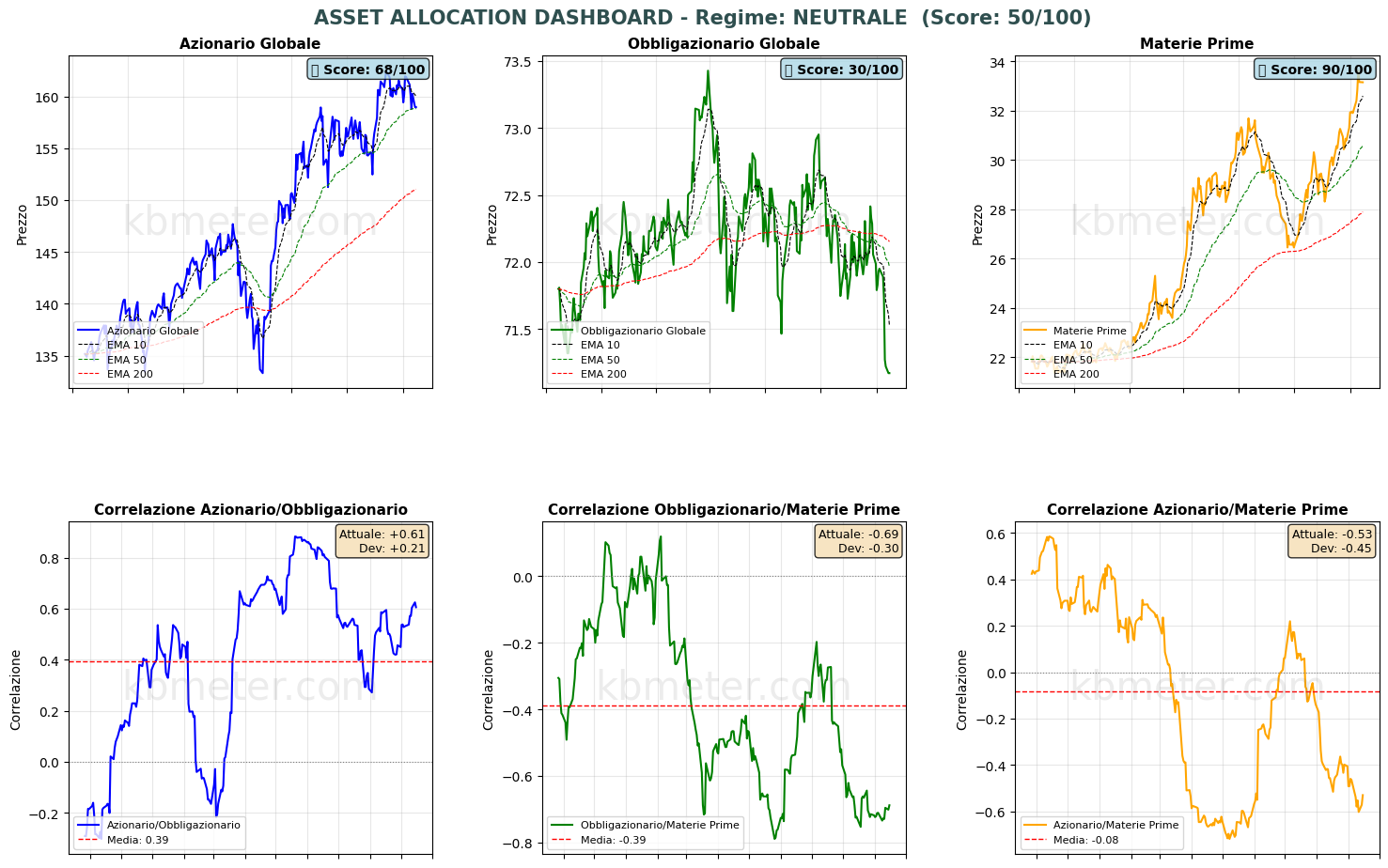
As for the asset classes, there is little to add: fixed income remains well below its long-term moving average, equities continue to test the support provided by their medium-term moving average, while commodities remain firmly in rally mode.
Our Market Weather Map confirms the picture described above. Expectations of higher interest rates are supporting the US dollar (+9 score points over the past seven days) while weighing on gold, whereas upward pressure on yields continues to keep fixed income in negative territory. Equities remain in the neutral zone, below the 50-point threshold, with technology still slightly above the score of the broader North American equity segment.
Global Futures – Pre-Market Sentiment
Pre-Market Futures: Global futures are signaling moderately risk-off sentiment (-0.45% on average), with the US slightly negative (-0.30%), Europe negative (-0.55%), and Asia slightly negative (-0.42%).
📊 Global Futures – Pre-Market Sentiment
- Nikkei 225: +0.08%
- Euro Stoxx 50: +0.03%
- DAX: -0.09%
- FTSE MIB: -1.49%
- IBEX 35: -1.00%
- Hang Seng: -0.74%
Macroeconomic calendar
On the macro front, today comes ahead of the release of data on the performance of the Chinese economy in August 2026, UK employment figures for the quarter ending in July 2026, the latest ZEW sentiment index for Germany, and the September 2026 Empire State Manufacturing Index.
Already a subscriber? Login here
NOTES AND WARNINGS
Data compiled by kbmeter.com. Analysis date: 15 September 2026 - 10:29 AM GMT+1
This content is provided for informational purposes only and should not be considered financial advice. All scores and assessments are based on the previous trading day’s closing prices. Futures indications refer to the date and time of the analysis.
