
Oil, Trump announcements have opposite effects on prices
Oil experienced a strong recovery at the end of 2024, but the new year promises to be fraught with uncertainty for crude oil prices. WTI fell again below the $80 per barrel mark, on expectations of an increase in US supply.
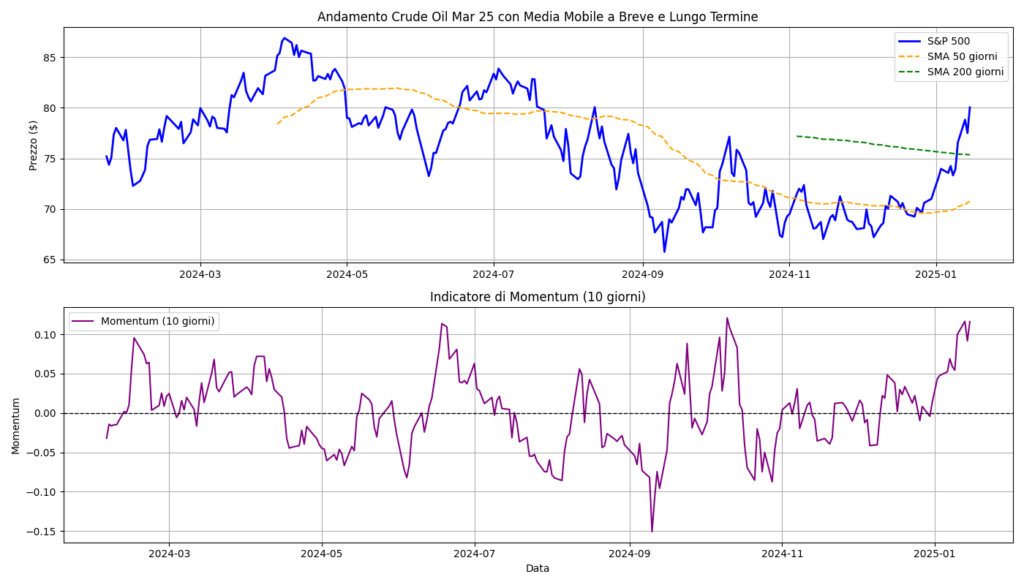
As can be seen from the chart above, the price of oil, after spending much of 2024 in a bearish trend, has found new energy (and momentum) as the year comes to a close. WTI is posting a YTD gain of about six percentage points, while Brent oil is up more than five percentage points.
Driving this price recovery was several pieces of news. From the hope that Chinese demand will rebound in a sustained manner, to further US sanctions on Russian oil, and ending with the particularly cold winter in some areas of the northern hemisphere.
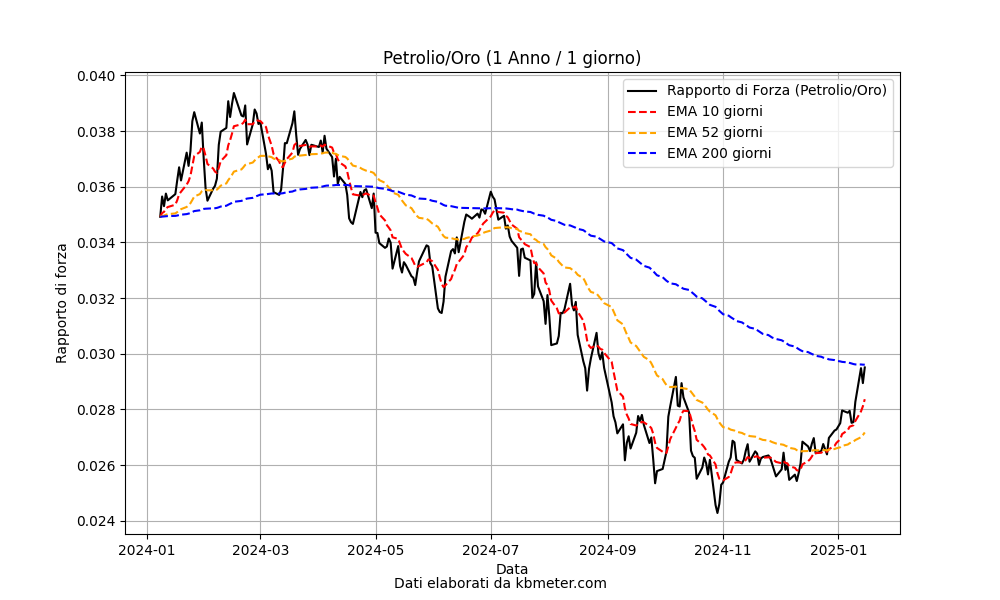
In recent months, crude oil has also gained strength against gold. We see this in the chart above, which represents the relative strength index of WTI against bullion. Once again we can see the negative trend for a large part of 2024 and the rebound that started in November last year.
If this is the situation, which incidentally could tickle OPEC to continue a policy of limiting production, the near future seems to be complicated by the latest moves by the White House. The free-for-all on the drilling front and the declaration of a state of energy emergency will lead to an increase in US oil production and export capacity, which will have a strong impact on supply and consequently on OPEC’s ability to influence the price.
On the other hand, one has to take into account the announced tariff moves towards Canada and Mexico that are likely to increase costs for US refineries.
In summary, while the expansion of US oil production could put downward pressure on prices, the protectionist trade policies introduced by the Trump administration could generate volatility and uncertainty in the global oil market.
