
Intermarket View on U.S. Consumer Confidence: Uncertainty Remains in March 2026
Intermarket analysis of U.S. consumer confidence at the beginning of March 2026 indicates a climate that remains uncertain, although there are some signs of improvement. The relative strength ratio between discretionary and defensive consumption remains below its long-term moving average.
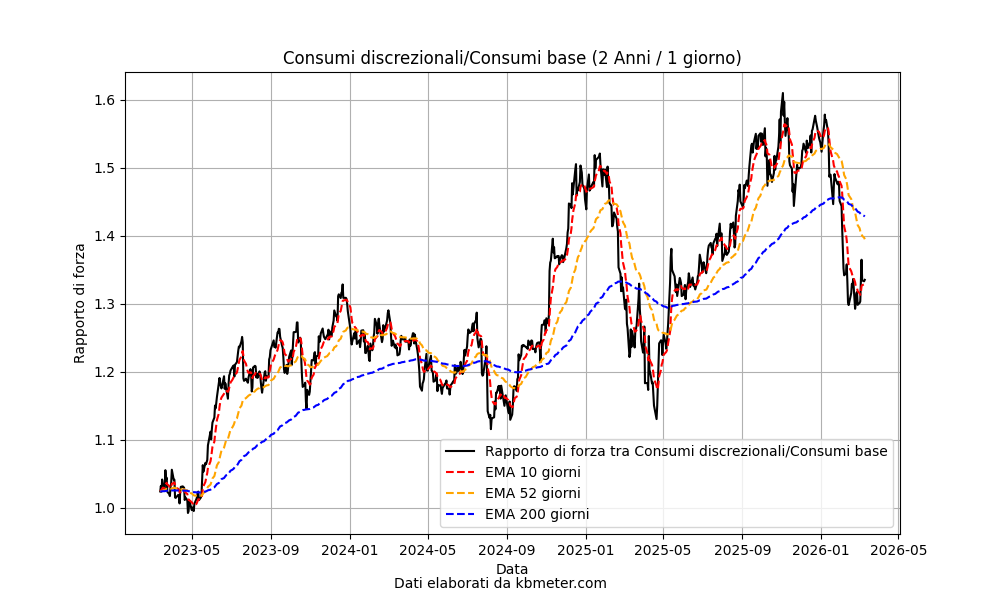
The chart above shows the trend of the relative strength ratio between consumer discretionary and consumer staples. A clear decline can be observed that characterized the beginning of 2026, with the indicator slipping below the long-term moving average. After returning to the levels seen in May 2025, it has shown a trend reversal in recent weeks.
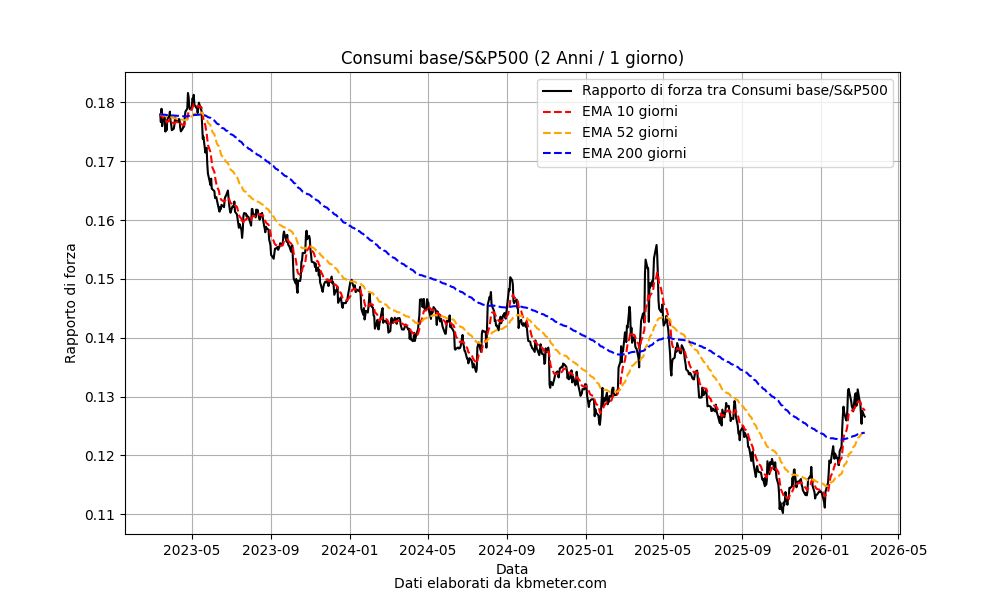
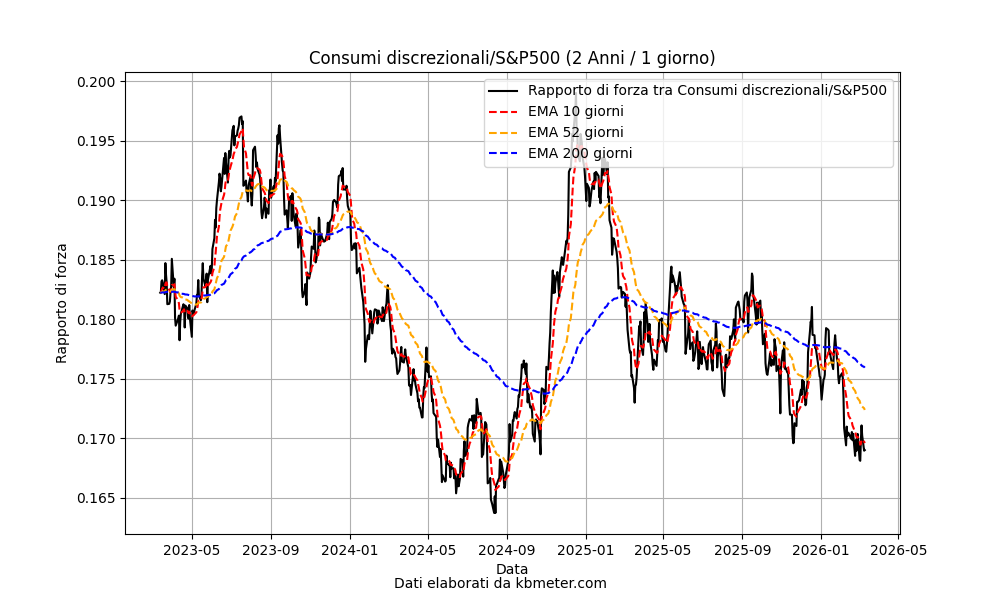
It is also interesting to compare the two sectors with the benchmark index (S&P 500). Both sectors appear to be in a phase of weakness relative to the main index; however, consumer staples recorded an improvement at the beginning of January, with the relative strength ratio managing to recover back toward the long-term moving average.
Overall, the indications still point to a climate of moderate confidence, with considerable uncertainty that recent geopolitical developments will certainly not help to dissipate.
